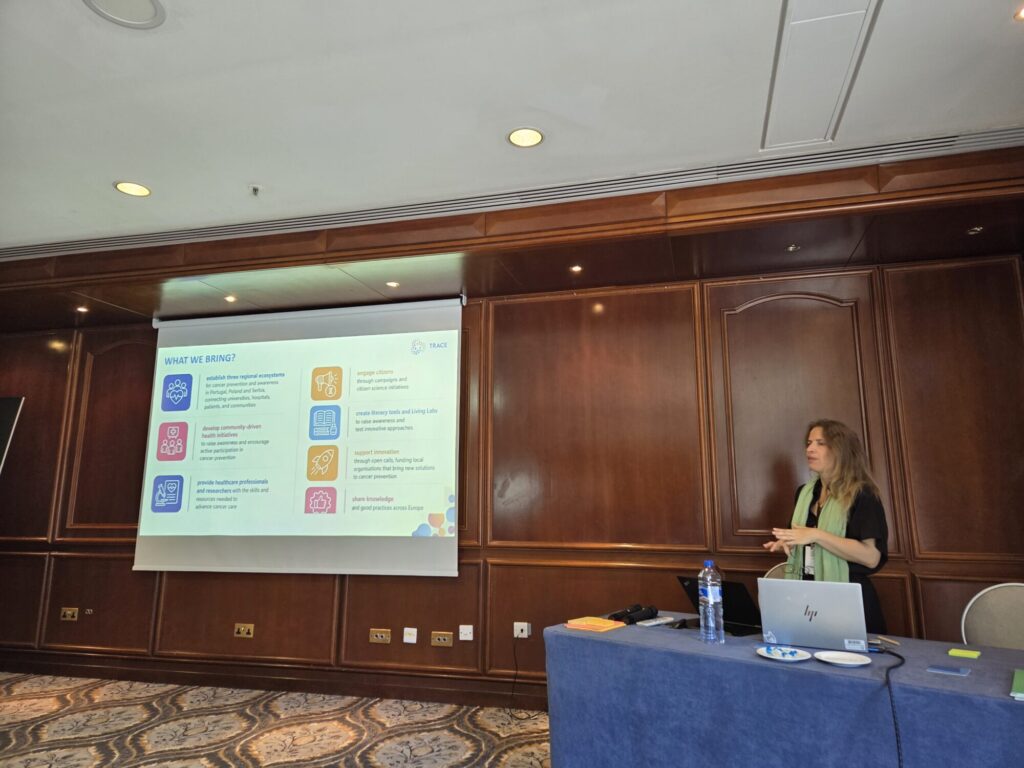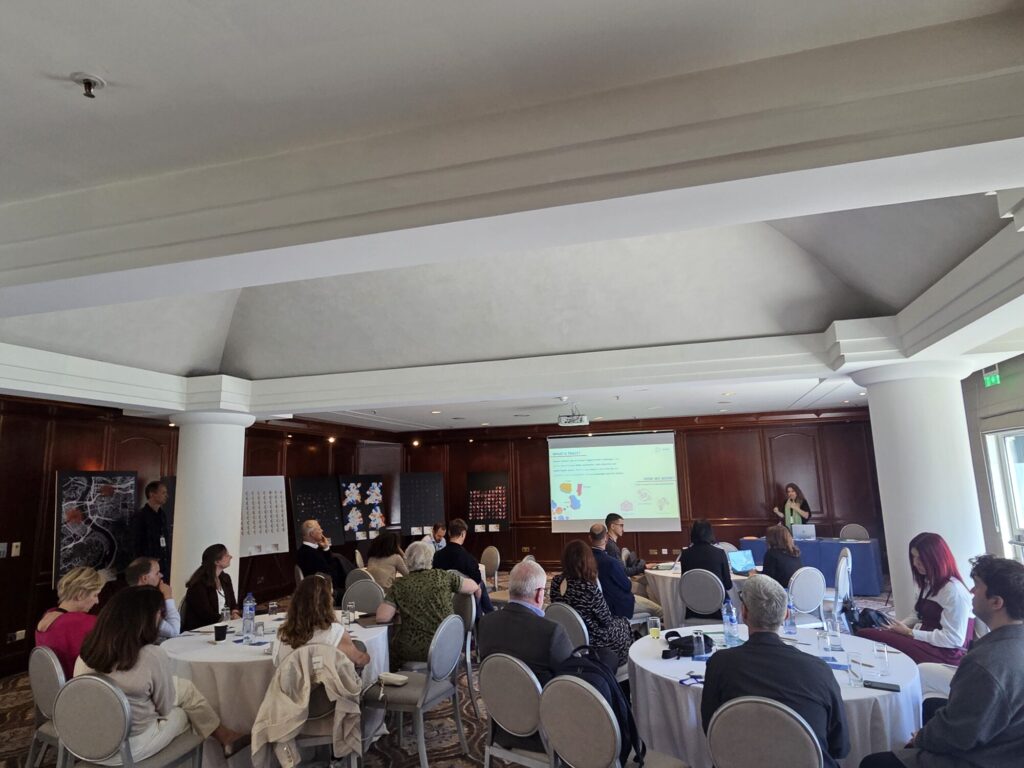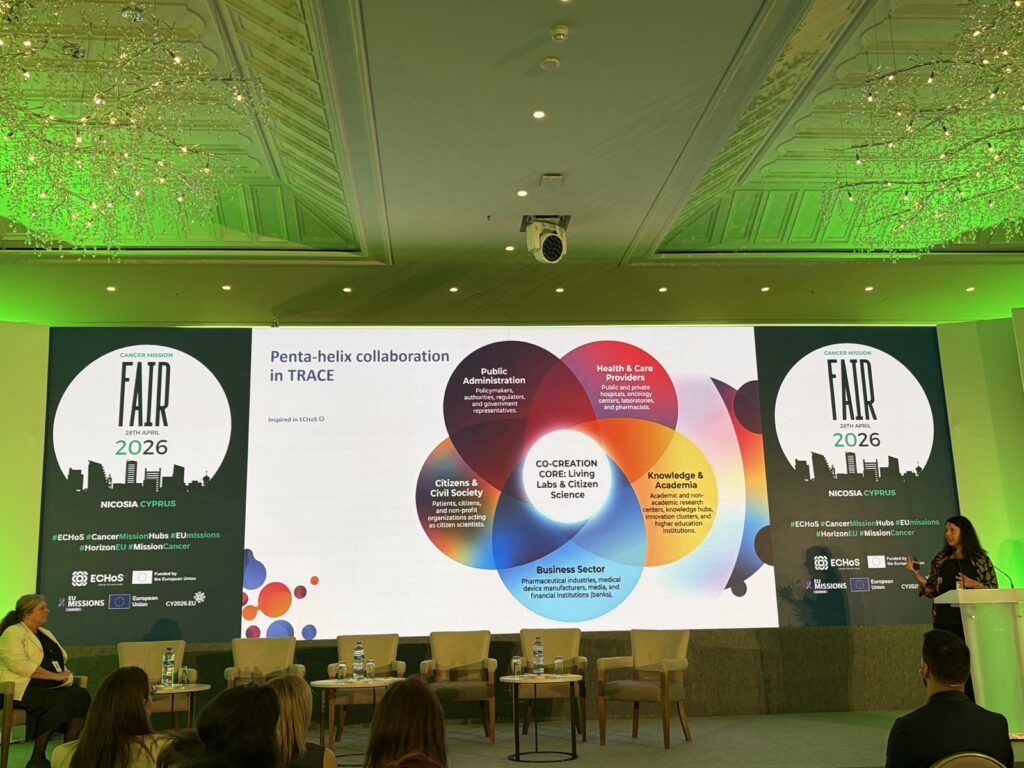
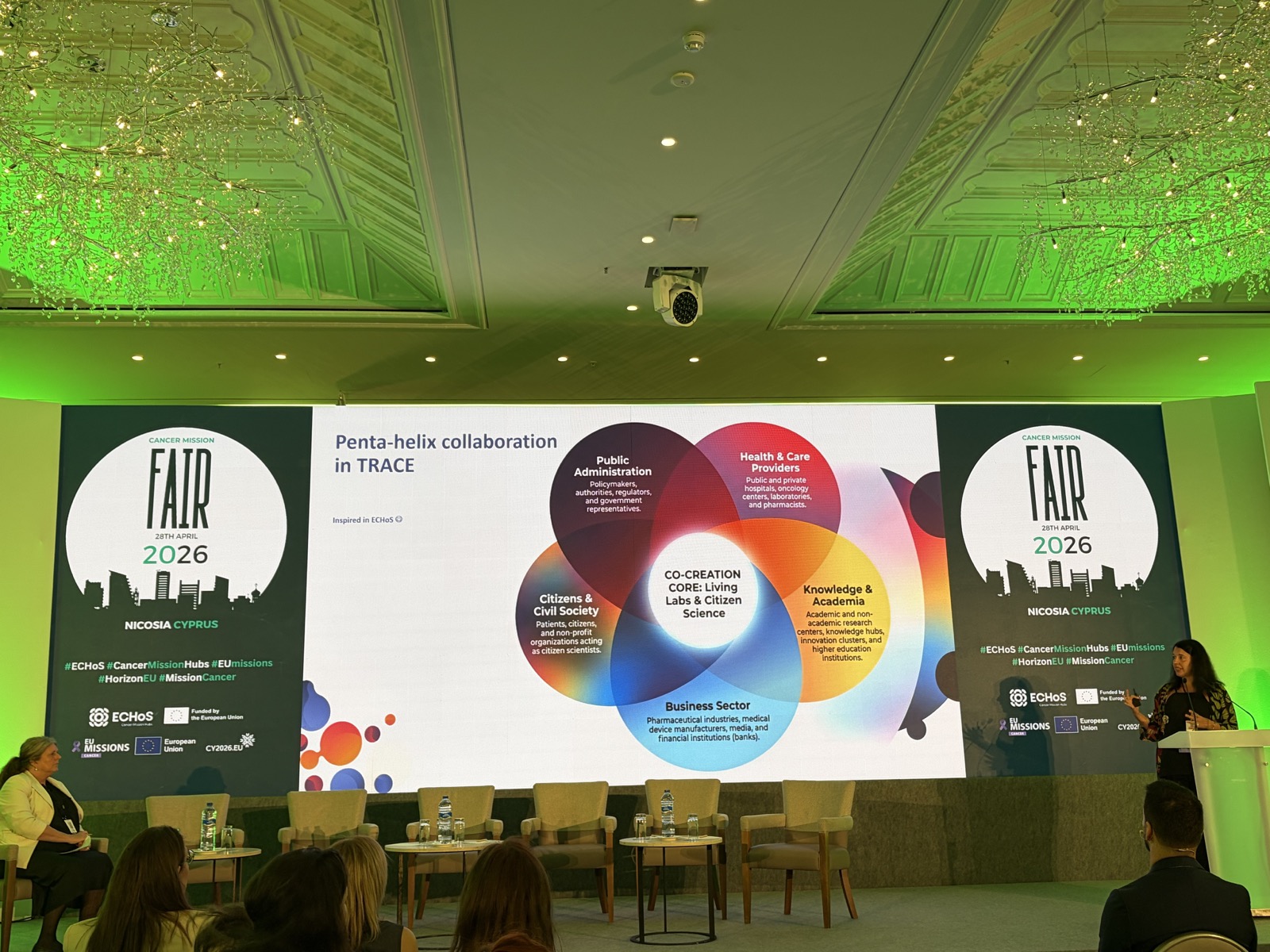
We finished our April in Nicosia, Cyprus for the 2nd European Cancer Mission Fair to present our project. Our coordinator, Nova National School of Public Health (represented by Sónia Dias, Maria João Marques, and Ana Gama), and our partner SHINE2Europe, (represented by Carina Dantas) flew to the location to share our project, discuss the best practices and drive collaborations in cancer care.
At the event, we had three different roles: a pitching session for our project at the “Bridging Cancer Research and Real-World Impact Through Co-Creation and Community Engagement Chair”, the workshop “Beyond Pilots: Synergising EU Cancer Projects for Ethical and Inclusive Implementation of Digital Tools” and we also had the opportunity to join the European Commission Conference “Understanding cancer in the digital age: data, innovation and equity”.
During the TRACE pitch, the conversation centered around participatory approaches and citizen science, highlighting a foundational commitment to working directly with people rather than merely for them. By integrating participatory methodologies such as living labs and citizen science, the project aims to bridge the gap between researchers and the community. A major takeaway from the panel was that while the goal is to enable actual implementation, achieving this is one of the most challenging ambitions of the project, proving once again that the devil truly lies in the details of execution.
The workshop sessions allowed participants to dive deeper into practical challenges and strategic solutions across several focused thematic tables: living Labs, personas, ethics. At the living labs table, a particularly vital topic of discussion emerged around inclusivity, specifically focusing on strategies to reach and engage individuals who are not digitally savvy. Meanwhile, the table dedicated to personas advocated for efficiency and practicality, suggesting that teams should avoid reinventing the wheel. Instead, the consensus was to benchmark against existing, well-developed personas and user scenarios, adapting them culturally and contextually to fit the unique needs of each specific project. The table on ethics and implementation tackled the complex landscape of data sharing. The primary conclusion from this discussion underscored that citizens and patients possess vastly different opinions, comfort levels, and needs regarding their data. Consequently, the workshop highlighted that data systems must find sophisticated ways to encompass and respect these diverse perspectives, firmly rejecting a one-size-fits-all approach in favor of more nuanced, user-centric ethical frameworks.
The interactive workshop joined different European-funded initiatives such as TRACE, MAYA Project, PATH, CAREWAY, CURTAIN Project, 4P-CAN Project, EU PERIFORMANCE project, CHILI-HPV and EQUITY-LA to move beyond project silos towards implementation in the community.
Organised as part of ECHoS | Establishing of Cancer Mission Hubs: Networks and Synergies, in collaboration with the European Commission’s EU Cancer Mission, the event brought together citizens, patients, and experts from across Europe to share best practices and drive collaborations in cancer care, offering a unique opportunity to learn from best practices and foster collaboration across sectors.