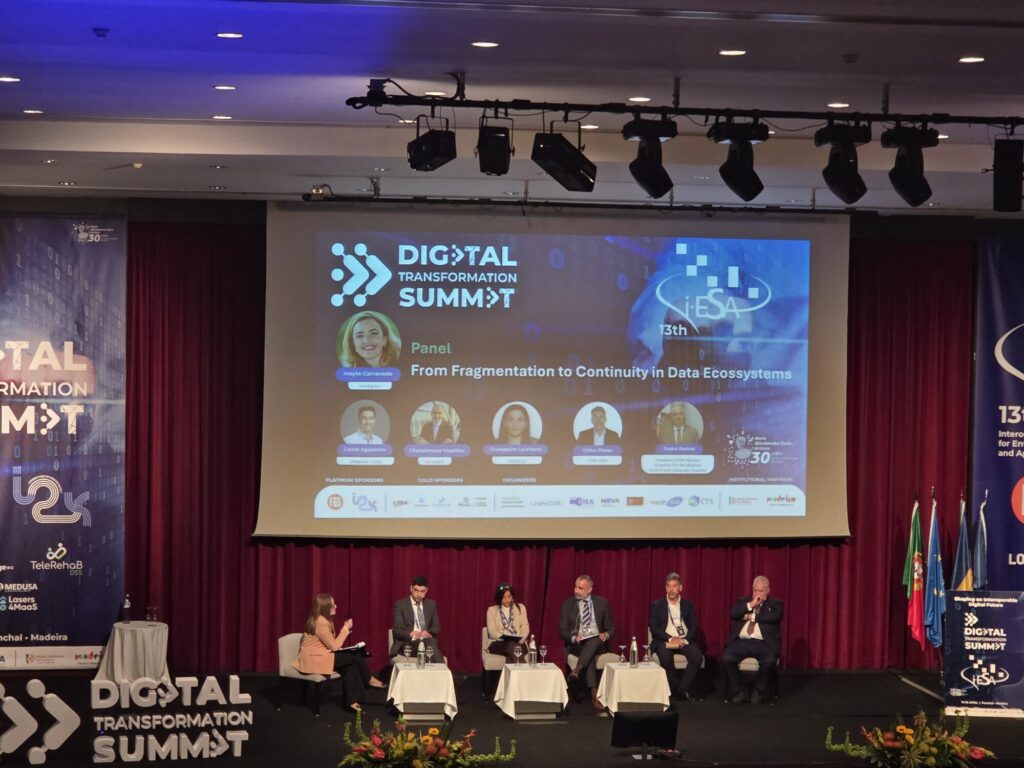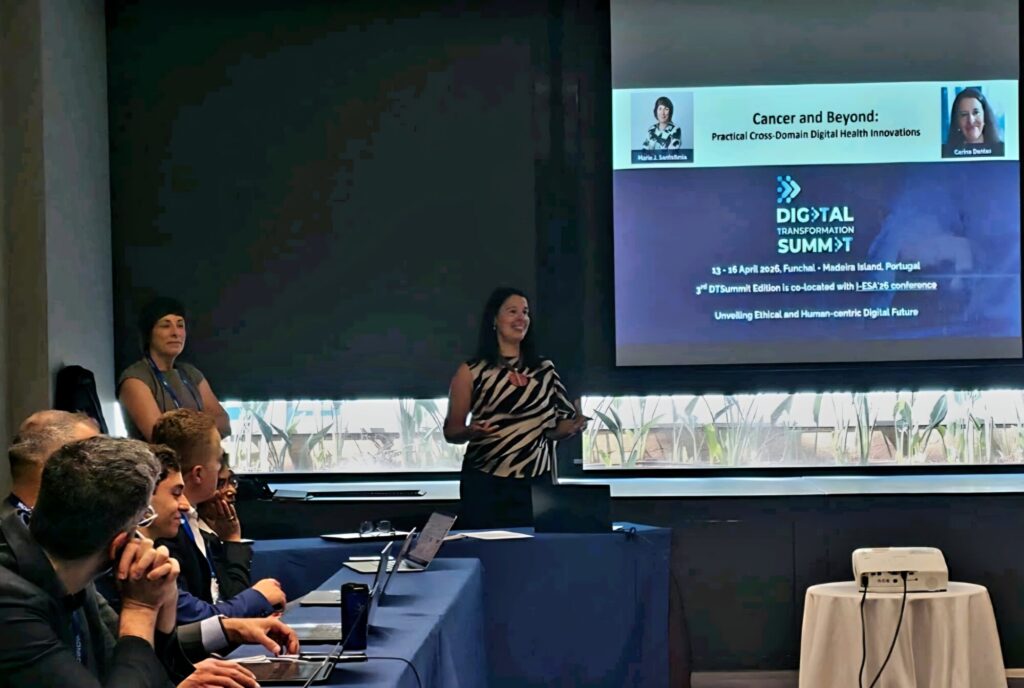
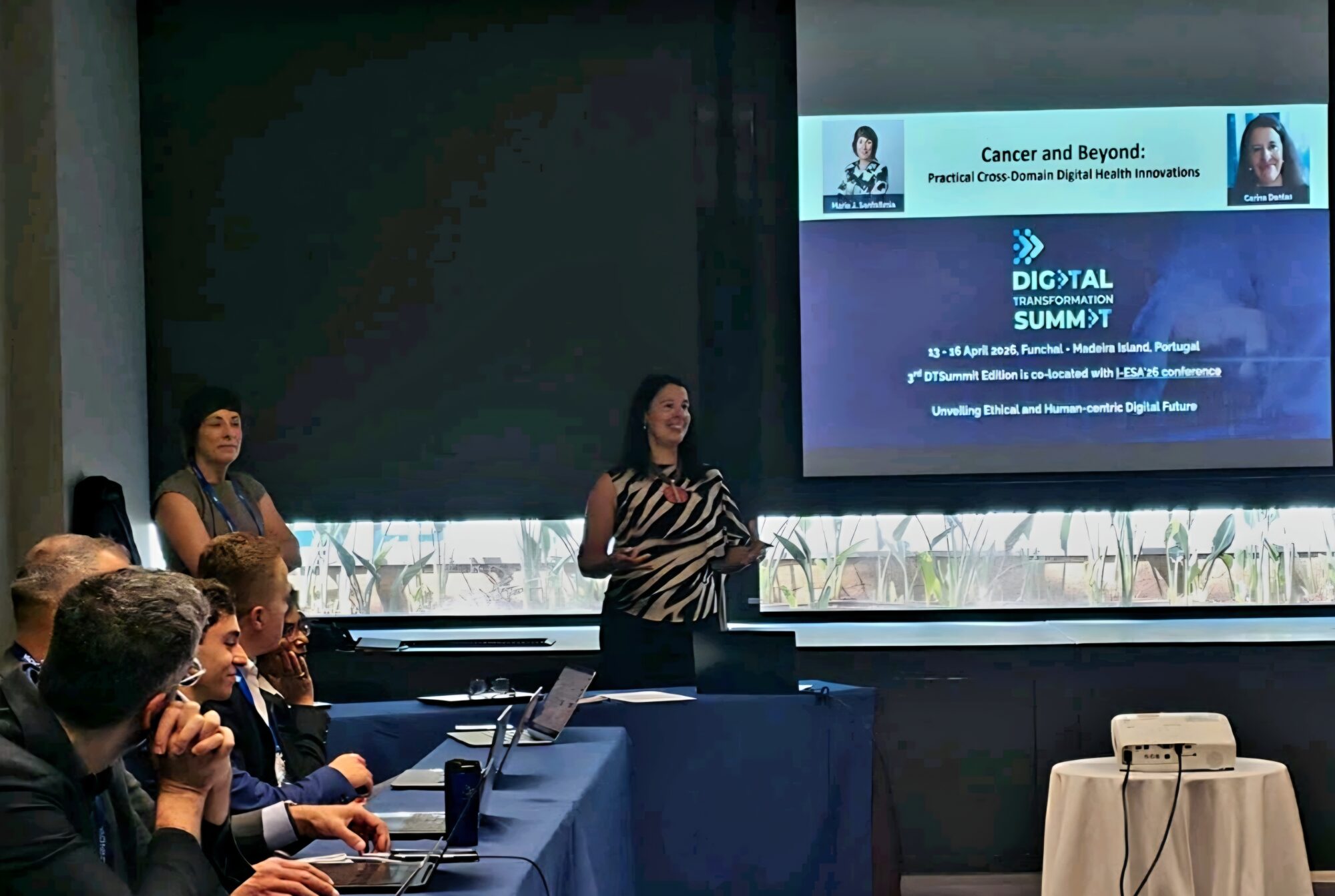
At the Digital Transformation Summit Madeira on 15 April 2026, the TRACE project was proud to contribute to the session “Cancer and Beyond: Practical Cross-Domain Digital Health Innovations”, highlighting how collaboration across sectors can strengthen cancer prevention and care at regional level.
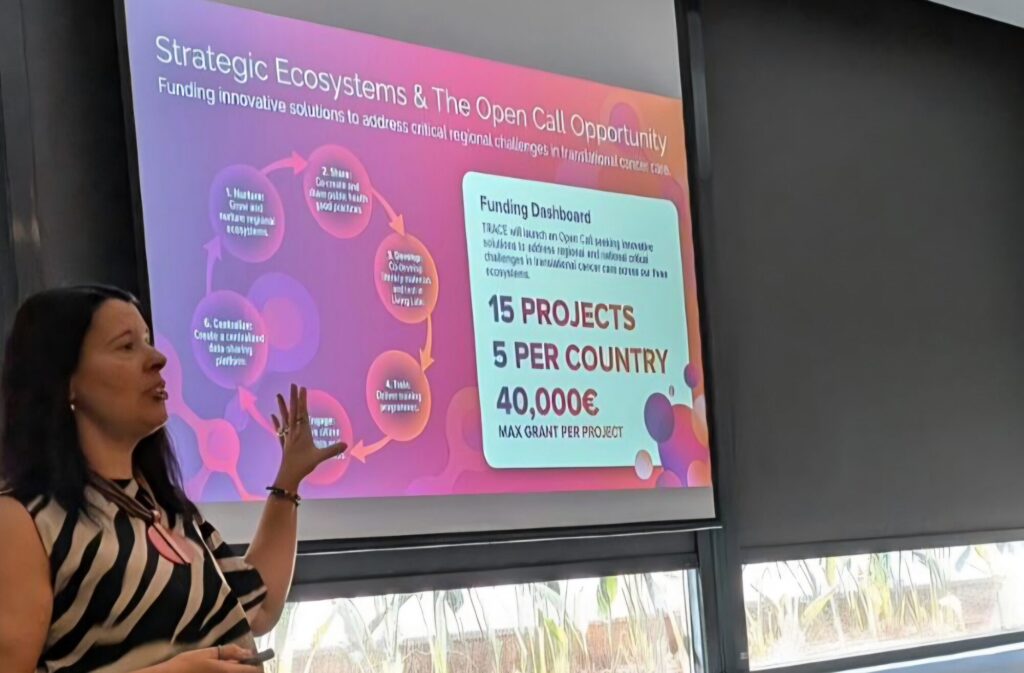
During the session, Carina Dantas, from SHINE 2Europe, shared insights from TRACE, demonstrating how meaningful cancer innovation goes beyond technology and depends on strong, participatory ecosystems. Her presentation emphasised the importance of engaging citizens, patients, healthcare professionals, researchers, industry, and policymakers throughout the innovation lifecycle.
Within TRACE, this multi-stakeholder approach is applied through regional Living Labs, citizen science and other co-creation activities that bring research closer to communities. By working directly with local stakeholders, the project supports the development of cancer literacy tools, awareness initiatives, and education programmes designed to address real needs and reduce inequalities in prevention and early detection.
The discussion also highlighted how regional collaboration can accelerate the translation of knowledge into practice. By strengthening connections between research institutions, healthcare systems, and communities, TRACE contributes to building resilient innovation ecosystems capable of delivering long-term impact in cancer prevention and survivorship.
The session expanded into the broader European landscape with insights from Charalampos Vassiliou (DG SANTE), who detailed the ongoing EU digital health transformation. This high-level policy work provides the structure necessary for innovations like AI reasoning in clinical decision support to flourish. As Nirmalie Wiratunga (Robert Gordon University) explained, AI is increasingly acting as a sophisticated partner for clinicians, helping to navigate complex data to provide more accurate, evidence-based care.
The technical frontier of the session was equally impressive, highlighting how hardware and software are converging to monitor and treat patients with unprecedented precision.Rafael Maestre and James Davis Sánchez (CETEM) presented the RespIrA and CARD-IA projects, which leverage electronic sensors to reshape the health landscape. These tools allow for continuous, real-time monitoring, moving healthcare away from reactive treatments toward proactive wellness.
Perhaps most striking was the work of João Santinha from the Breast Cancer Research Program (BCRP) — Champalimaud Foundation). For a disease that affects 1 in 8 women, the BCRP is utilizing AI to develop virtual human twins. These digital models allow surgeons to simulate and plan complex procedures with extreme accuracy, leading to safer surgeries and better aesthetic outcomes.
The session also highlighted a suite of targeted projects designed to protect patients both during and after their cancer journey:
- The Cinderella Project: Using AI-driven tools to ensure safer, more consistent results in locoregional breast surgery.
- The Artillery Project: Developing trustworthy AI systems to detect early cardiovascular disease (CVD) risk factors in breast cancer patients.
- The MAYA Project: Represented by Maria Jose Santofimia Romero (Universidad de Castilla-La Mancha), this initiative introduces Phyx.io, a platform using smart mirrors to support the physical and emotional recovery of adolescents and young adults post-cancer.
By weaving together high-tech AI models with grounded, community-based innovation, these projects are proving that the future of cancer care is not just digital—it is deeply connected, regional, and personal.